
 EN
EN

Understanding the difference between soundproofing and acoustic treatment is crucial for anyone looking to improve their space's audio environment. While these terms are often used interchangeably, they serve distinctly different purposes in sound management. Soundproofing focuses on blocking sound transmission between spaces, while acoustic treatment aims to enhance the quality of sound within a room. The choice between these approaches depends on your specific needs, budget, and the acoustic challenges you're facing in your environment.
Understanding Soundproofing Fundamentals
Mass Law and Sound Transmission
Soundproofing operates on the principle of mass law, which states that doubling the mass of a barrier increases its sound blocking capability by approximately 6 decibels. This fundamental concept explains why heavy materials like concrete, dense drywall, and specialized sound barriers are effective at preventing sound transmission. The goal of soundproofing is to create an impermeable barrier that stops sound waves from passing through walls, floors, and ceilings.
Effective soundproofing requires addressing four key elements: mass, absorption, decoupling, and damping. Mass provides the primary barrier, absorption prevents sound energy from building up within wall cavities, decoupling eliminates direct pathways for vibration transmission, and damping reduces resonant vibrations in building materials. Professional soundproofing projects often incorporate all these elements to achieve optimal results.
Construction Methods and Materials
True soundproofing typically involves significant construction work, including double-wall systems, resilient channels, and specialized insulation materials. Mass-loaded vinyl, dense fiberglass batts, and multiple layers of drywall are common components in soundproofing assemblies. These materials work together to create substantial barriers that can reduce sound transmission by 40-60 decibels or more when properly installed.
The installation process for soundproofing is labor-intensive and often requires professional expertise. Room-within-a-room construction, floating floors, and decoupled ceiling systems represent the gold standard for soundproofing but require significant investment in both materials and installation costs. These methods are typically reserved for recording studios, home theaters, or spaces where complete sound isolation is essential.
Acoustic Treatment Principles and Applications
Sound Wave Behavior and Control
Acoustic treatment focuses on managing sound waves within a space to improve audio quality, clarity, and overall listening experience. Unlike soundproofing, which blocks sound transmission, acoustic treatment shapes how sound behaves inside a room by controlling reflections, reducing reverberation, and minimizing unwanted echoes. This approach addresses issues like flutter echoes, standing waves, and excessive reverberation time that can negatively impact speech intelligibility and music appreciation.
The science behind acoustic treatment involves understanding frequency response, absorption coefficients, and diffusion patterns. Different materials and designs target specific frequency ranges, with porous absorbers handling mid and high frequencies while bass traps address low-frequency issues. An acoustic panel system must be carefully selected and positioned based on room dimensions, intended use, and existing acoustic characteristics.
Types of Acoustic Treatment Solutions
Acoustic treatment encompasses various product categories, each designed for specific acoustic challenges. Absorption panels reduce reflective energy and control reverberation, while diffusion panels scatter sound waves to create a more natural acoustic environment. Bass traps address low-frequency buildup in room corners, and ceiling treatments manage overhead reflections that can interfere with direct sound paths.
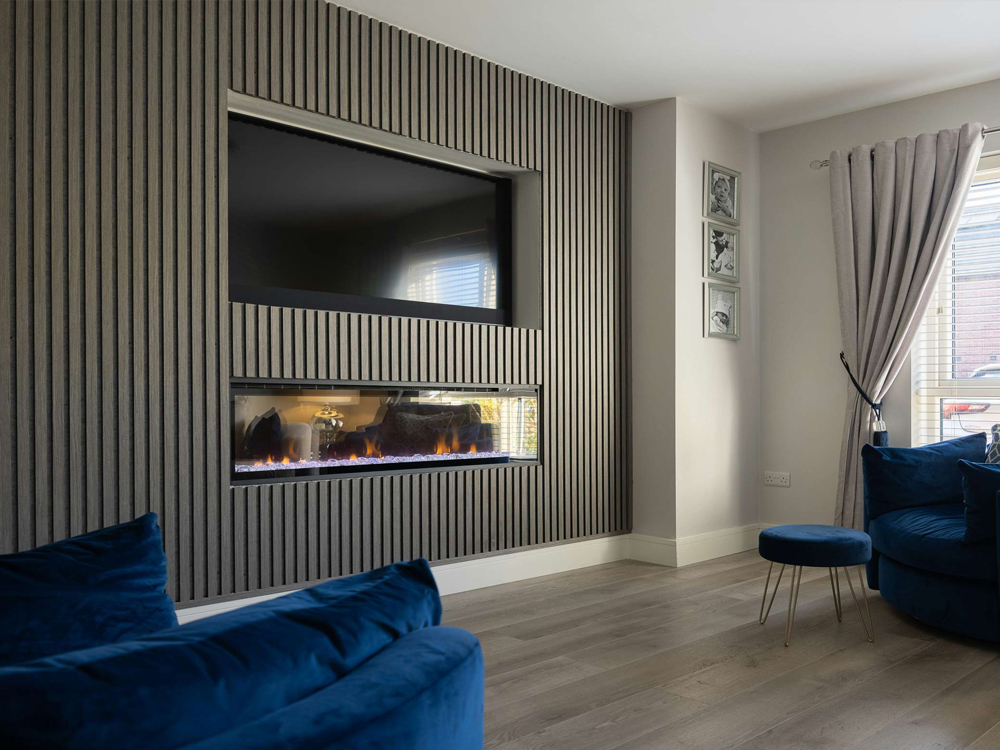
Modern acoustic treatment options range from traditional fiberglass panels to innovative designs incorporating perforated wood, fabric-wrapped systems, and decorative elements that serve dual aesthetic and acoustic purposes. The effectiveness of any acoustic panel depends on its placement, thickness, density, and the specific acoustic properties of the space being treated. Professional acoustic consultants often use specialized software to model room acoustics and determine optimal treatment configurations.
Key Differences Between Soundproofing and Acoustic Treatment
Performance Objectives and Outcomes
The primary distinction between soundproofing and acoustic treatment lies in their fundamental objectives. Soundproofing aims to prevent sound from entering or leaving a space, measured in decibel reduction of transmitted sound. Acoustic treatment seeks to improve sound quality within a space, measured by parameters like reverberation time, frequency response, and clarity metrics. These different goals require entirely different approaches, materials, and installation methods.
Soundproofing success is typically measured using Sound Transmission Class ratings, which quantify how effectively a barrier blocks airborne sound transmission. Acoustic treatment effectiveness is evaluated through reverberation time measurements, frequency analysis, and subjective listening tests. A well-soundproofed room may still have poor acoustics, while a space with excellent acoustic treatment may offer little sound isolation from adjacent areas.
Cost and Implementation Considerations
The financial investment required for soundproofing versus acoustic treatment varies dramatically. Soundproofing projects often require structural modifications, specialized materials, and professional installation, resulting in costs that can range from thousands to tens of thousands of dollars depending on the scope. Acoustic treatment, while still requiring careful planning, typically involves surface-mounted solutions that can be implemented at a fraction of soundproofing costs.
Implementation timelines also differ significantly between these approaches. Soundproofing may require permits, structural engineering consultation, and extended construction periods that disrupt normal space usage. Acoustic treatment installations can often be completed in days rather than weeks, with minimal disruption to ongoing activities. This makes acoustic treatment more accessible for businesses, educational institutions, and homeowners seeking immediate improvements.
When to Choose Acoustic Panels for Your Space
Identifying Acoustic Problems
Determining when acoustic panel treatment is the appropriate solution requires careful assessment of existing acoustic conditions and specific performance goals. Common indicators that suggest acoustic treatment needs include excessive echo or reverberation, poor speech intelligibility, difficulty concentrating due to noise distractions, or unsatisfactory audio quality in music or media spaces. These issues typically stem from hard reflective surfaces, inadequate absorption, or poor room geometry rather than sound transmission problems.
Professional acoustic measurements can quantify reverberation time, identify problematic frequency ranges, and pinpoint reflection points that contribute to acoustic issues. However, many acoustic problems can be identified through careful listening and observation. Spaces with predominantly hard surfaces like concrete, glass, and metal typically benefit significantly from strategic acoustic panel placement to balance absorption and reflection characteristics.
Application-Specific Considerations
Different applications require tailored approaches to acoustic panel selection and placement. Office environments benefit from panels that reduce noise distractions and improve speech privacy without over-dampening the space. Conference rooms require treatment that enhances speech intelligibility and reduces echo for effective communication. Educational spaces need acoustic solutions that support learning by improving teacher-student communication and reducing background noise interference.
Entertainment venues, restaurants, and retail spaces face unique challenges balancing acoustic comfort with aesthetic requirements and operational needs. Each application demands careful consideration of fire safety ratings, durability, maintenance requirements, and visual integration with existing design elements. The versatility of modern acoustic panel systems allows for customized solutions that address specific performance criteria while maintaining design flexibility.
Installation and Placement Strategies
Optimal Positioning Techniques
Effective acoustic panel placement requires understanding sound wave behavior and reflection patterns within specific room geometries. Primary reflection points, where sound waves bounce off surfaces before reaching listeners, represent critical treatment locations. These points can be identified through geometric analysis or by using mirror techniques to visualize reflection paths from sound sources to listening positions.
Wall-mounted panels should typically cover 15-25% of available wall surface area, distributed strategically rather than concentrated in single locations. Ceiling treatment becomes increasingly important in larger spaces or rooms with high ceilings where overhead reflections significantly impact acoustic quality. Corner placement addresses low-frequency buildup while providing efficient use of available mounting surfaces.
Professional Installation Considerations
While many acoustic panel systems accommodate DIY installation, professional installation ensures optimal performance and longevity. Professional installers understand building codes, fire safety requirements, and structural considerations that affect long-term performance. They also possess specialized tools and techniques for achieving precise alignment, secure mounting, and seamless integration with existing architectural elements.
Installation quality directly impacts both acoustic performance and visual appearance. Properly installed panels maintain consistent spacing, secure attachment, and professional appearance that reflects positively on the overall space design. Professional installation also typically includes warranty coverage and ongoing support for maintenance or future modifications as space needs evolve.
FAQ
What is the main difference between soundproofing and using acoustic panels
Soundproofing blocks sound transmission between spaces using mass and isolation techniques, while acoustic panels improve sound quality within a space by controlling reflections and reverberation. Soundproofing prevents sound from entering or leaving a room, whereas acoustic panels shape how sound behaves inside the room to enhance clarity and reduce echo.
Can acoustic panels provide any soundproofing benefits
Acoustic panels provide minimal soundproofing benefits, typically reducing sound transmission by only 3-8 decibels. Their primary function is acoustic treatment rather than sound isolation. For significant soundproofing, specialized barriers with high mass and decoupling systems are required. However, acoustic panels can slightly reduce sound transmission through absorption of sound energy.
How do I determine if my space needs acoustic treatment or soundproofing
If you experience echo, poor speech clarity, or excessive reverberation within your space, acoustic treatment is needed. If sound from adjacent rooms or outside sources is problematic, soundproofing is required. Consider your budget and goals: acoustic treatment improves existing sound quality, while soundproofing creates sound isolation between spaces. Many spaces benefit from acoustic treatment as a more cost-effective solution.
What factors should I consider when selecting acoustic panels for my application
Key factors include the specific acoustic challenges in your space, aesthetic requirements, fire safety ratings, and budget constraints. Consider the frequency range of problematic sounds, available mounting surfaces, maintenance requirements, and whether the panels need to serve decorative purposes. Professional acoustic consultation can help optimize panel selection and placement for your specific application and performance goals.